
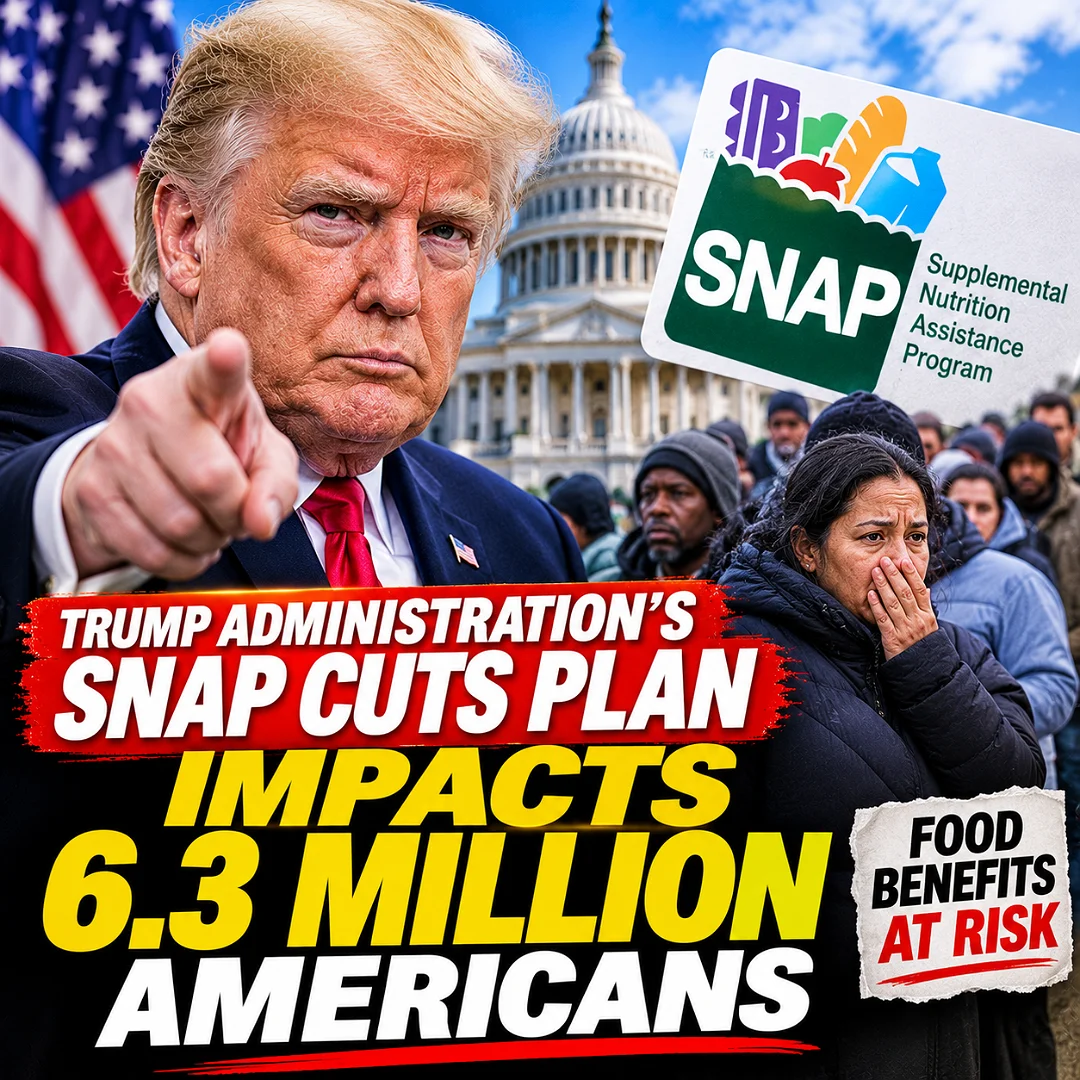
Did you know that a single policy shift could remove food assistance for 6.3 million Americans? The Trump administration’s recent move to cut Supplemental Nutrition Assistance Program benefits has reignited a national conversation about hunger, health, and government responsibility.
Why does this matter now? Food insecurity rates have risen sharply after the pandemic, and SNAP,commonly known as food stamps,remains the largest federal safety‑net program for nutrition. Cutting benefits not only threatens the well‑being of millions but also tests the political will of a government that has historically used food policy as a lever for broader economic goals.
What Is the Supplemental Nutrition Assistance Program?
The Supplemental Nutrition Assistance Program, or SNAP, provides eligible low‑income households with an Electronic Benefits Transfer (EBT) card that can be used to purchase approved food items. As noted by CBS News, the program aims to reduce hunger and improve nutrition outcomes across the United States.
Program Scope and Eligibility
Eligibility for SNAP is determined by household income, expenses, and composition. While specific thresholds vary by state, the program generally serves families, seniors, and individuals whose income falls below 130 percent of the federal poverty level. According to the USDA policy shift reported by Politico, adjustments to eligibility criteria can affect millions of participants.
More ahead you will understand how changes to the program’s design influence purchasing habits. For instance, a recent Yahoo! report highlighted that SNAP is being updated to encourage healthier food choices by restricting certain items on the EBT card.
Trump Administration’s Proposed Cuts
On November 10, 2026, CNBC’s coverage of the Trump administration’s plan revealed that up to 6.3 million people could lose SNAP benefits under the new proposal. The administration argues that tightening eligibility and reducing benefit levels will lower federal spending. However, critics contend that the cuts could exacerbate food insecurity, especially among children and seniors.
According to Politico, the USDA’s policy shift aims to “cut millions of people off food aid program.” This language underscores the scale of the proposed reduction and its potential impact on vulnerable populations.
Key Elements of the Proposal
- Raise the income eligibility threshold, effectively disqualifying households that previously qualified.
- Decrease the maximum monthly allotment for eligible families.
- Introduce stricter work‑requirement enforcement for able‑bodied adults.
That detail changes everything for families that rely on SNAP to bridge the gap between wages and grocery bills. The work‑requirement enforcement, in particular, could create administrative bottlenecks that delay aid distribution.
Potential Consequences for Food Security
Food insecurity is more than a statistic; it translates into poorer health outcomes, higher medical costs, and reduced academic performance for children. A study highlighted by EurekAlert! demonstrates a direct correlation between SNAP participation and reduced rates of food insecurity.
When families lose access to SNAP, they may turn to cheaper, calorie‑dense but nutritionally poor foods, increasing the risk of chronic diseases such as obesity and diabetes. The recent Yahoo! article confirms that SNAP policy changes can shape dietary choices, reinforcing the program’s role in public health.
Impact on Seniors and Retirees
Retirees, who often live on fixed incomes, are especially vulnerable. MSN reported three food assistance programs that can help retirees beyond SNAP, but the loss of SNAP benefits would still leave a sizable gap in their nutrition budget.
That nuance matters because many seniors already rely on SNAP as a primary source of food security. Cutting benefits could force them to choose between medication and meals.
Political and Social Reactions
Stakeholders from advocacy groups to state governments have voiced strong opposition. The Center on Budget and Policy Priorities warned that the cuts could push an additional 2 million people into hunger. Meanwhile, some Republican lawmakers support the initiative, citing concerns about program abuse and fiscal responsibility.
More ahead you will see how state-level adaptations could mitigate or amplify the federal changes. Several states have historically implemented supplemental nutrition programs that augment federal SNAP benefits, offering a safety net that may buffer the impact of cuts.
Legal Challenges and Court Rulings
Legal experts anticipate challenges based on the Administrative Procedure Act, arguing that the administration did not provide sufficient justification for the abrupt changes. Past court decisions have upheld the government’s authority to modify SNAP, but they also require robust evidence of necessity and proportionality.
In the meantime, millions of households await the final rule’s publication, uncertain about their future access to food assistance.
What Can Affected Individuals Do?
If you or someone you know may be impacted, consider the following steps:
- Check eligibility status on your state’s SNAP website.
- Explore alternative assistance programs, such as those highlighted by MSN for retirees.
- Contact local food banks and community organizations for emergency support.
These actions can provide short‑term relief while longer‑term policy solutions are debated.
Looking Ahead: Potential Reforms
Beyond the immediate cuts, policymakers are discussing broader reforms to SNAP. Proposals include expanding nutrition incentives, increasing electronic benefit flexibility, and integrating SNAP with other social services to create a more holistic safety net.
More ahead you will understand that these reforms could reshape how SNAP supports not just basic caloric needs but also overall health and economic stability.
For a deeper dive into how other trends are influencing American households, see “The Rise of Plant‑Based Diets in America” and “How Inflation Affects Grocery Prices” on Portal Super Interessante.
Continue following the developments around SNAP and food policy. The outcomes of this administration’s proposal will reverberate through communities, health systems, and the national economy for years to come.
Continue acompanhando o Portal Super Interessante…