
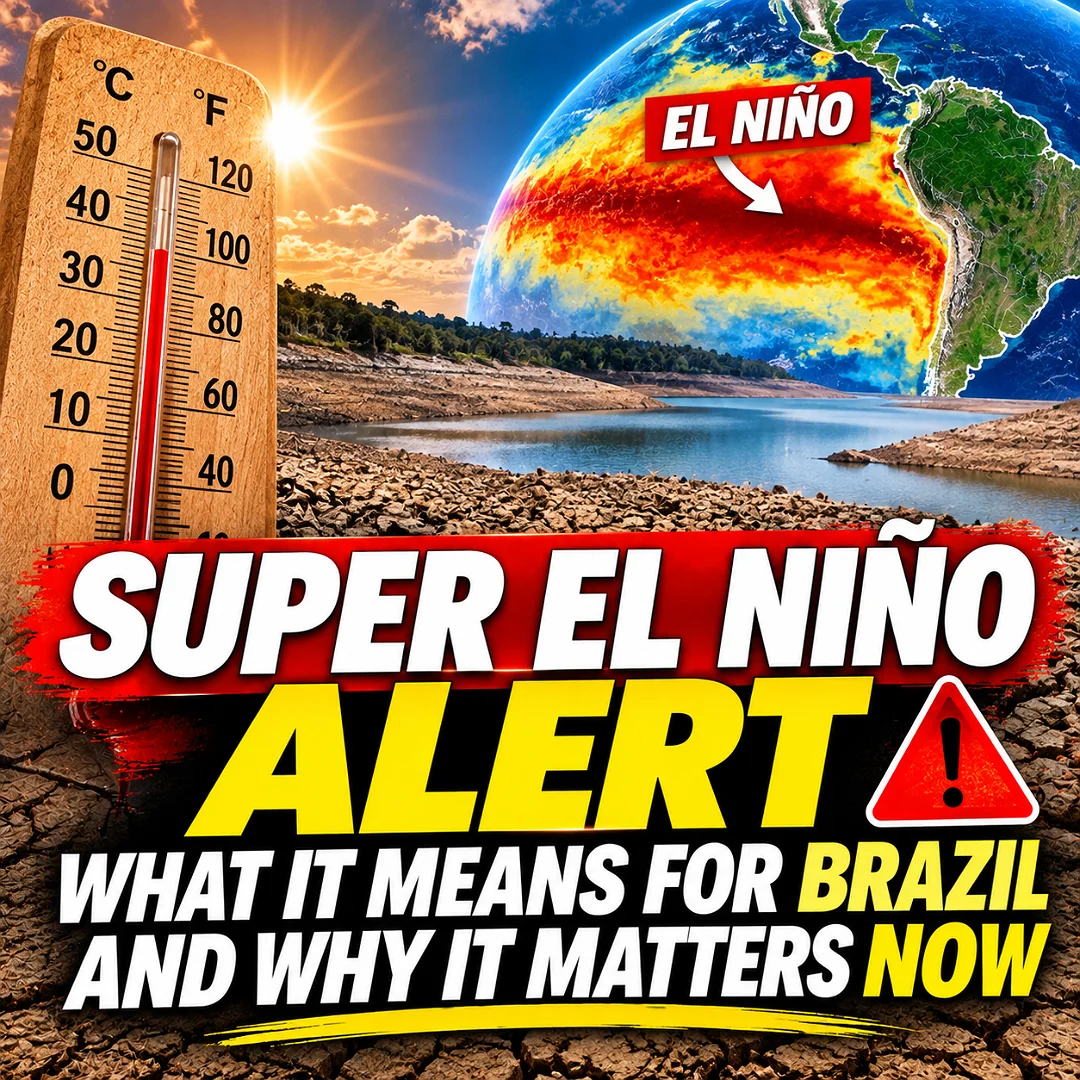
Did you know that a single climatic episode can raise the risk of over 800,000 premature deaths in Brazil by 2027? The looming Super El Niño event is set to do exactly that, according to a recent study published by Correio Braziliense (https://www.correiobraziliense.com.br/cbradar/el-nino-e-calor-extremo-estudo-projeta-857-mil-mortes-ate-2027-e-alerta-para-riscos-no-brasil/).
As the official designation of a Super El Niño is hours away, understanding its timeline, geographic reach, and societal repercussions becomes essential for anyone living in or doing business with Brazil. This article breaks down the science, the gaps in municipal contingency planning, and practical steps readers can take to safeguard their health and livelihoods.
What Exactly Is a Super El Niño?
El Niño is a periodic warming of the central and eastern Pacific Ocean that alters global weather patterns. When the temperature anomaly exceeds a certain threshold, the phenomenon graduates to a “Super” El Niño, a classification historically linked to more intense rainfall, droughts, and temperature extremes (Gazeta do Povo, https://www.gazetadopovo.com.br/brasil/o-que-e-o-el-nino-e-quais-os-efeitos-no-brasil/).
Scientists at the National Oceanic and Atmospheric Administration (NOAA) predict the upcoming Super El Niño will peak in early 2027, maintaining heightened intensity for up to three years. For Brazil, the most notable impacts include severe droughts in the Northeast, unprecedented flooding in the South, and a surge in extreme heat events across the entire country.
Why It Matters Now
This is not a distant threat. Climate models show that the 2026‑2027 window will witness record‑breaking temperatures that could exacerbate existing public‑health crises, agricultural shortfalls, and energy shortages. The urgency is underscored by a Gazeta do Povo report that the phenomenon will likely reach its peak by 2027, making immediate preparedness crucial.
Brazil’s Municipal Contingency Landscape
According to a recent monitoring report from Agência Brasil (https://agenciabrasil.ebc.com.br/meio-ambiente/noticia/2026-11/monitor-do-el-nino-apenas-284-municipios-tem-planos-de-contingencia), only 284 municipalities have formal contingency plans for El Niño‑related events. Brazil has more than 5,500 municipalities, meaning less than 5% are prepared.
These plans typically include early‑warning systems, water‑rationing protocols, and emergency shelters. However, the lack of comprehensive coverage leaves a massive portion of the population vulnerable to floods, landslides, and heat‑related illnesses.
What That Gap Means for Residents
Residents in unprepared municipalities may experience delayed emergency response times, limited access to clean water, and higher exposure to heatstroke. The disparity also creates economic inequality, as regions with contingency plans tend to recover faster and attract post‑disaster investment.
More detailed analysis of municipal readiness can be found in the article Monitoramento Climático no Brasil, which discusses the broader network of climate monitoring stations across the country.
Human Health Risks: The 857,000 Death Projection
A study highlighted by Correio Braziliense estimates that extreme heat associated with the Super El Niño could cause up to 857,000 premature deaths in Brazil by 2027. The projection is based on temperature‑mortality curves that show a steep rise in mortality once ambient temperatures exceed 30 °C for prolonged periods.
Populations most at risk include the elderly, children, and those with pre‑existing cardiovascular or respiratory conditions. Urban heat islands,areas where concrete and asphalt retain heat,amplify the danger in major cities like São Paulo and Rio de Janeiro.
Protective Measures for Individuals
Staying hydrated, limiting outdoor activity during peak heat hours, and using reflective or natural‑fiber clothing can reduce personal risk. Community‑level actions, such as planting trees and preserving green spaces, have been shown to lower ambient temperatures by up to 2 °C (Fonte oficial (gov.br), https://www.gov.br/icmbio/pt-br/assuntos/noticias/el-nino-entenda-os-impactos-no-brasil-e-como-a-conservacao-da-natureza-ajuda-a-reduzir-riscos).
Readers can learn more about practical conservation steps in the guide Como a Conservação Ajuda na Mudança Climática, which outlines actionable steps for households and municipalities.
Economic Consequences: Agriculture, Energy, and Infrastructure
El Niño’s impact on rainfall patterns will disrupt Brazil’s agricultural calendar. The Northeast, already prone to drought, could see a 30 % reduction in soybean yields, while the South may face flood‑related crop losses of up to 20 % (InfoMoney, https://www.infomoney.com.br/business/global/veja-tudo-o-que-e-preciso-saber-sobre-o-el-nino/).
Energy demand will surge as temperatures climb, stressing the national grid. Hydroelectric plants, which rely on river flow, may experience reduced water levels, leading to increased reliance on costlier thermal power.
Infrastructure Resilience
Urban infrastructure,particularly drainage systems,will be tested by heavier rains. Cities lacking modern storm‑water management may see amplified flooding, as demonstrated by recent events in Rio de Janeiro where rainfall exceeded 200 mm in 24 hours.
Investment in resilient infrastructure, such as permeable pavements and upgraded levees, can mitigate these risks. The Brazilian Ministry of Infrastructure has earmarked R$ 5 billion for climate‑resilient projects in 2027, though allocation details remain pending.
Why Conservation Is a Critical Mitigation Tool
Preserving natural ecosystems,especially wetlands, forests, and mangroves,offers a buffer against extreme weather. Wetlands absorb excess rainfall, reducing downstream flooding, while forests provide shade and evapotranspiration that lower local temperatures.
Federal guidelines from the Brazilian Institute of Environment and Renewable Natural Resources (IBAMA) stress that protecting 30 % of the country’s remaining forest cover could cut heat‑related mortality by up to 15 % (Fonte oficial (gov.br)).
Community‑Driven Conservation Success Stories
In the state of Pará, community‑managed forest reserves have reduced river flooding incidents by 12 % over the past five years. Similar initiatives in the Atlantic Forest biome have shown a measurable decline in urban heat island intensity (Metrópoles, https://www.metropoles.com/distrito-federal/em-meio-ao-el-nino-df-tem-alta-em-numero-de-raios-que-chegam-ao-solo).
These examples illustrate that local action, supported by national policy, can make a tangible difference in the face of a Super El Niño.
Future Outlook: When Will El Niño Subside?
Forecasts from the Brazilian Meteorological Institute (INMET) suggest that the Super El Niño will gradually wane by late 2028, though residual effects may linger into 2029. Climate scientists stress that the phenomenon’s timeline is influenced by oceanic heat content and atmospheric circulation patterns, which are being closely monitored (Globo, https://valor.globo.com/brasil/noticia/2026/11/11/el-nino-vai-ate-quando-no-brasil-o-que-dizem-as-previsoes-para-o-fenomeno.ghtml).
Monitoring agencies worldwide will release periodic updates, and the official Super El Niño designation is expected within hours, signaling the start of heightened alert levels.
How Readers Can Stay Informed
Subscribe to the Brazilian National Climate Monitoring System’s alerts, follow reputable news outlets like InfoMoney and Globo, and engage with local government platforms that publish municipal contingency updates.
More tips on staying prepared are detailed in the article Como Se Preparar para Eventos Climáticos, offering a checklist for households and businesses.
In summary, the impending Super El Niño poses significant health, economic, and environmental challenges for Brazil. Yet, with targeted conservation, improved municipal preparedness, and informed personal actions, the worst outcomes can be mitigated.
Continue acompanhando o Portal Super Interessante…