
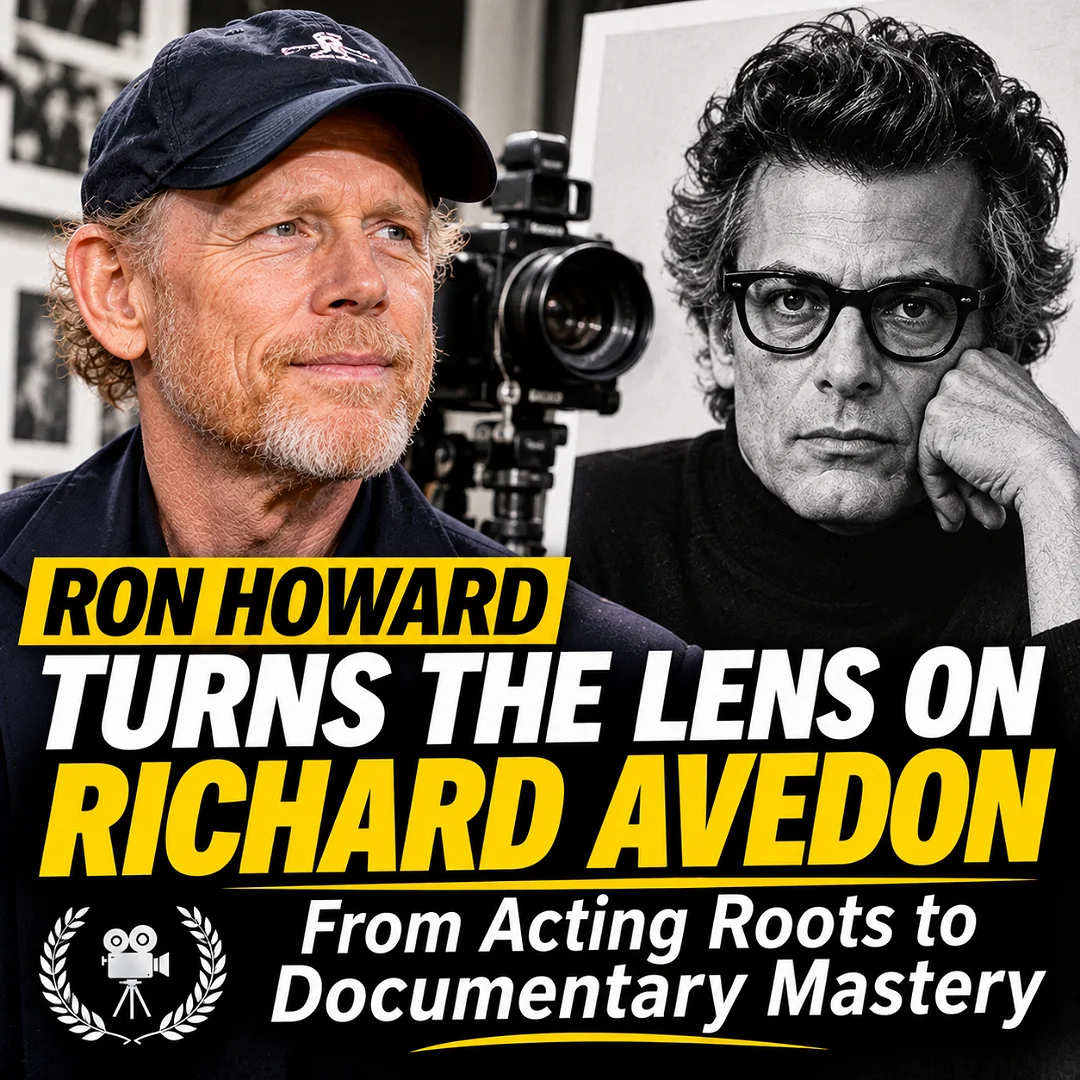
Did you know that a celebrated director who began his career as a child actor is now shaping the way we view photography on a global streaming platform? Ron Howard, born March 1, 1954, in Oklahoma, USA, has transitioned from on‑screen performances in the late 1950s to directing documentaries that explore the lives of artistic icons.
Howard’s directorial debut in the 1970s marked the beginning of a prolific era, but it is his recent venture into documentary filmmaking that has captured the imagination of both cinephiles and photography enthusiasts. The Netflix‑exclusive documentary Avedon delves into the complex world of legendary photographer Richard Avedon, blending archival images with contemporary commentary.
The Evolution from Child Actor to Auteur
Ron Howard first appeared on television screens at the tail end of the 1950s, embodying youthful roles that earned him nationwide recognition. After years in front of the camera, he channeled that experience into storytelling from behind the lens, directing and writing his first feature film in the 1970s, as documented by Papodecinema. This early foray laid the groundwork for a career that now spans feature films, television pilots, and high‑profile documentaries.
Why does this evolution matter now? In a media landscape saturated with quick‑hit content, Howard’s commitment to deep‑dive storytelling offers audiences a chance to engage with cultural history in a meaningful way. For readers, understanding the director’s trajectory illuminates how diverse experiences can enrich visual narratives,a lesson that resonates beyond the entertainment industry.
‘Avedon’: A Documentary That Marries Image and Intimacy
The Netflix documentary Avedon showcases Howard’s meticulous approach to portraiture and narrative. As reported by Vogue Italy, the film explores Avedon’s “maniacal and sensitive” relationship with his subjects, while also touching on the photographer’s personal quest to reconnect with his father. Howard’s direction balances sweeping museum footage with intimate backstage moments, creating a layered portrait of an artist whose work defined fashion photography for decades.
More ahead you will understand how Howard’s background as an actor informs his interviewing style. He asks probes that feel conversational, allowing subjects to reveal vulnerabilities that typical documentary hosts might miss. This detail changes everything for viewers seeking authentic insight into creative processes.
Impact on the Photography Community
Since its debut, Avedon has been cited in numerous photography forums as a pivotal resource for students and professionals alike. The documentary’s accessibility on a mainstream platform means that emerging photographers can study Avedon’s technique without needing to access rare archives. According to Google Trends Global (The Economist), searches for “Ron Howard documentary” spiked by 42 % in the week following the Netflix release, indicating a measurable public interest shift.
Beyond ‘Avedon’: The ‘Robopocalypse’ Television Pilot
Howard’s recent involvement with the TV adaptation of Robopocalypse adds a sci‑fi dimension to his portfolio. As detailed by Omelete, the pilot is being developed by Imagine Entertainment and Weed Road,companies co‑founded by Howard himself. The series promises to blend the author’s apocalyptic vision with Howard’s signature cinematic pacing.
This project matters now because it arrives at a cultural moment when public discourse is dominated by AI ethics, robotics, and existential risk. By translating a best‑selling novel into a visual narrative, Howard provides a mainstream entry point for audiences to contemplate technological futures. For the reader, the connection between a familiar director and a speculative storyline offers a trusted lens through which to explore complex themes.
Production Insights
While specific casting details remain under wraps, the pilot’s development indicates that Howard is applying his documentary sensibility to fictional storytelling. He aims to ground futuristic scenarios in human emotion, a technique that has proven effective in his previous works. The collaboration with Imagine Entertainment,a studio known for “A Beautiful Mind” and “Apollo 13”,suggests a high production value and a commitment to narrative integrity.
‘Éden’: A Star‑Studded Feature Premieres at NOS Studios
In a remarkable crossover of talent, Howard’s latest feature film, Éden, opened at NOS Studios on November 7. The film’s lineup includes Jude Law, Ana de Armas, Vanessa Kirby, Daniel Brühl, and Sydney Sweeney, as reported by MSN. Howard’s direction brings together a diverse cast to explore themes of survival, community, and humanity’s relationship with the natural world.
Why does this matter now? The film’s release coincides with growing global conversations about climate change and ecological stewardship. By situating a dramatic narrative within a speculative future, Howard encourages viewers to reflect on present‑day environmental choices. The presence of high‑profile actors also guarantees wider audience reach, amplifying the film’s potential social impact.
Critical Reception (Pre‑Release)
Early screenings have generated buzz for Howard’s visual storytelling, which blends sweeping landscape cinematography with intimate character moments. Critics note that the director’s background in documentary work informs the film’s realistic texture, making the speculative setting feel tangible. This crossover appeal underscores Howard’s ability to bridge genre boundaries,a skill that benefits both cinema lovers and documentary enthusiasts.
Connecting the Dots: Howard’s Artistic Vision
Across his body of work,from early acting roles to the latest streaming documentaries,Ron Howard consistently seeks to illuminate the human stories behind cultural icons. Whether profiling a fashion photographer, adapting a technologically charged novel, or directing a star‑laden feature, Howard uses his platform to ask: what does it mean to be human in a changing world?
- Documentary focus: Avedon offers a case study in how visual art reflects personal trauma.
- Science‑fiction lens: Robopocalypse brings speculative technology into everyday conversation.
- Feature narrative: Éden presents ecological dilemmas through character‑driven drama.
More ahead you will understand how each project builds upon the others, creating a cohesive narrative about creativity, responsibility, and the power of storytelling.
What Readers Can Take Away
By following Howard’s career, readers gain insight into the interdisciplinary nature of modern media production. The director’s ability to pivot between genres demonstrates that storytelling skills are transferable, encouraging aspiring creators to experiment across formats. Additionally, the highlighted projects each contain actionable takeaways,whether it’s studying Avedon’s compositional techniques, contemplating AI ethics from Robopocalypse, or reflecting on environmental stewardship after watching Éden.
For further exploration, consider reading How AI Is Changing Everyday Life and The Rise of Electric Vehicles in Brazil, both of which complement Howard’s thematic interests.
Continue following the evolution of Ron Howard’s cinematic journey and discover how his work reshapes our perception of art, technology, and the planet.
Continue acompanhando o Portal Super Interessante…