
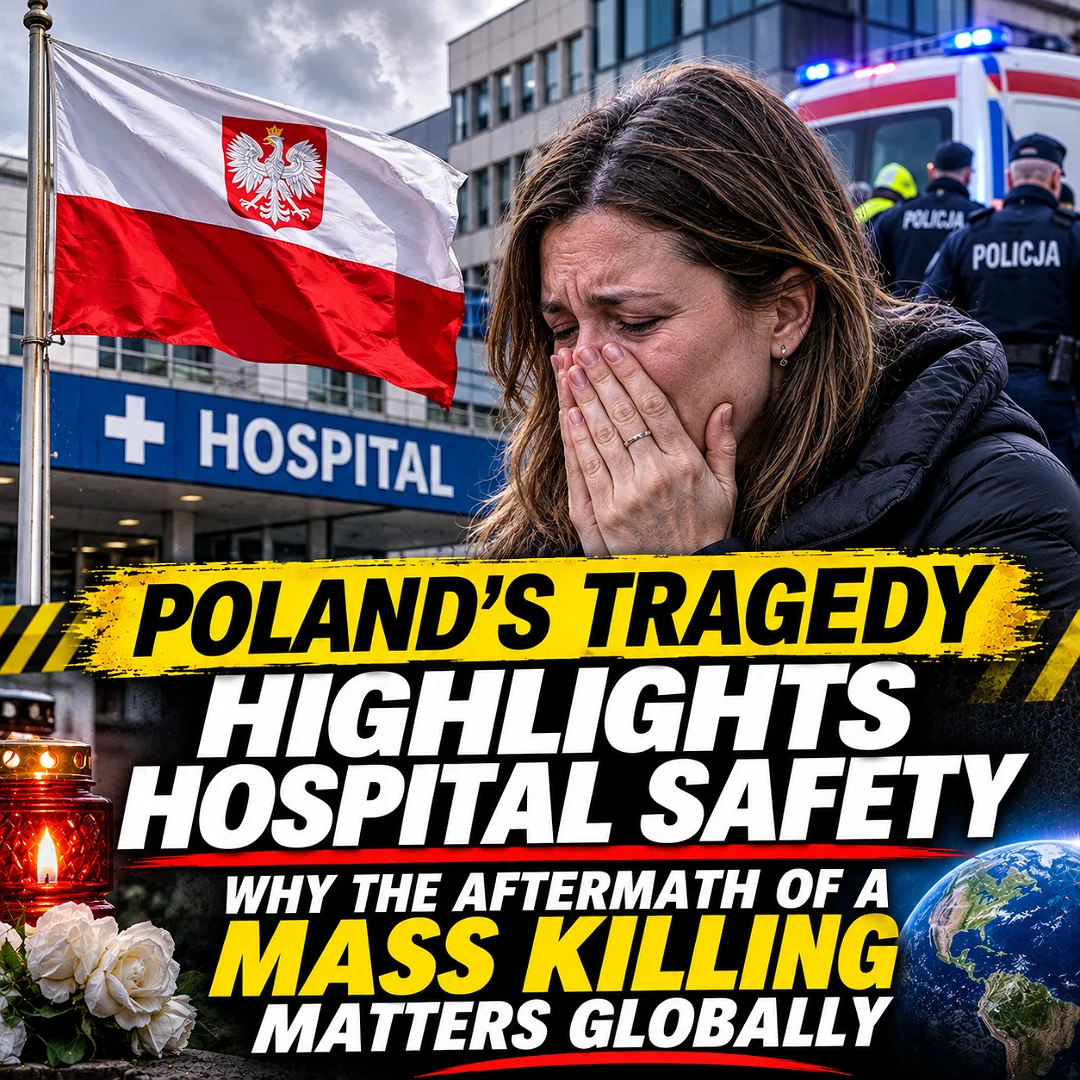
When a gunman who killed at least six people in Poland died inside a hospital, the world asked a simple yet unsettling question: how safe are the places meant to heal?
From the Streets of Poland to the Hospital Ward: A Timeline
On 10 November 2026, a shooter opened fire in a crowded market in the Polish city of Bydgoszcz, leaving at least six victims dead, according to CNN Brazil. The assailant, whose identity remains undisclosed in international reports, was apprehended and later transferred to a regional hospital for treatment of severe injuries sustained during the police operation. Within days, the man succumbed to complications, as confirmed by UOL.
Why the hospital became the focal point of the tragedy
The decision to move the suspect to a civilian hospital rather than a secure forensic facility sparked immediate debate. Experts from the World Health Organization (WHO) note that hospitals are traditionally designed as open spaces, emphasizing trust and accessibility over security. This design philosophy, while essential for patient care, can create vulnerabilities when violent individuals are admitted.
More importantly, the incident forced health‑care administrators to confront a pressing question: how can a hospital protect its patients, staff, and the public without compromising its core mission? In the weeks that followed, Polish health officials announced a comprehensive review of security protocols, a move echoed by hospitals worldwide.
International Perspective: Hospital Safety in the Spotlight
Across the globe, hospitals face a growing array of security challenges. In the United States, the Hospital Association reported a 23 % rise in violent incidents over the past five years. In Brazil, recent headlines illustrate how hospital infrastructure is evolving under political leadership. Governor Jerônimo Rodrigues authorized a new hospital construction agreement and announced major investments in Gentio do Ouro, according to a official government source (gov.br). These investments aim to expand capacity while also integrating modern security technologies.
Meanwhile, the Hospital Geral de Bonsucesso in Rio de Janeiro recently celebrated a milestone: reaching 450 beds for the Unified Health System (SUS), as reported by Agência Brasil. This expansion reflects a broader trend of increasing hospital capacity in response to demographic pressures, but it also underscores the need for robust safety measures in larger facilities.
Lessons from Brazil’s Hospital Leadership Changes
In a surprising turn, the popular Brazilian TV series “Por Você” announced that the fictional character Pérola has reassumed the presidency of the hospital featured in the drama, as reported by Globo. While fictional, this storyline mirrors real‑world leadership transitions that often bring fresh priorities, including security upgrades and staff training programs.
These leadership changes, whether on screen or in real hospitals, often trigger policy reviews that can improve safety. More ad hoc, the Polish case demonstrates how a single violent event can act as a catalyst for national health systems to reassess their preparedness.
Security Measures Hospitals Are Implementing
Hospitals worldwide are adopting a suite of security technologies to mitigate risks. These include:
- Access‑control systems that restrict entry to sensitive areas.
- Video analytics powered by AI to detect aggressive behavior.
- Secure triage rooms designed to separate violent or unstable patients from the general population.
- Staff training programs focused on de‑escalation techniques.
More advanced facilities are integrating biometric identification and real‑time communication platforms that alert security teams at the first sign of trouble. These innovations, however, raise privacy concerns. Balancing patient confidentiality with public safety remains a delicate act for administrators.
How These Changes Affect the Reader
If you or a loved one visits a hospital in the next few months, you may notice tighter door controls, visible security personnel, and more informative signage. While these measures can feel restrictive, they are intended to protect the vulnerable. Understanding the rationale behind them can reduce anxiety and foster cooperation during emergencies.
Moreover, the conversation around hospital safety is now part of broader debates on public security, mental health, and extremist ideologies. By staying informed, readers can advocate for policies that balance openness with protection.
Related Stories You Might Find Useful
For a deeper look at how health systems are adapting to new challenges, read The Rise of Telemedicine: How Digital Health Is Changing Care. Another perspective on public safety comes from What Is the Future of Renewable Energy? Experts Weigh In, which explores how energy policies intersect with emergency preparedness.
These articles provide additional context on the evolving landscape of health care and public safety, helping readers grasp why the recent hospital incident in Poland matters beyond its immediate tragedy.
Continue following the developments in hospital security and public health on Portal Super Interessante.