
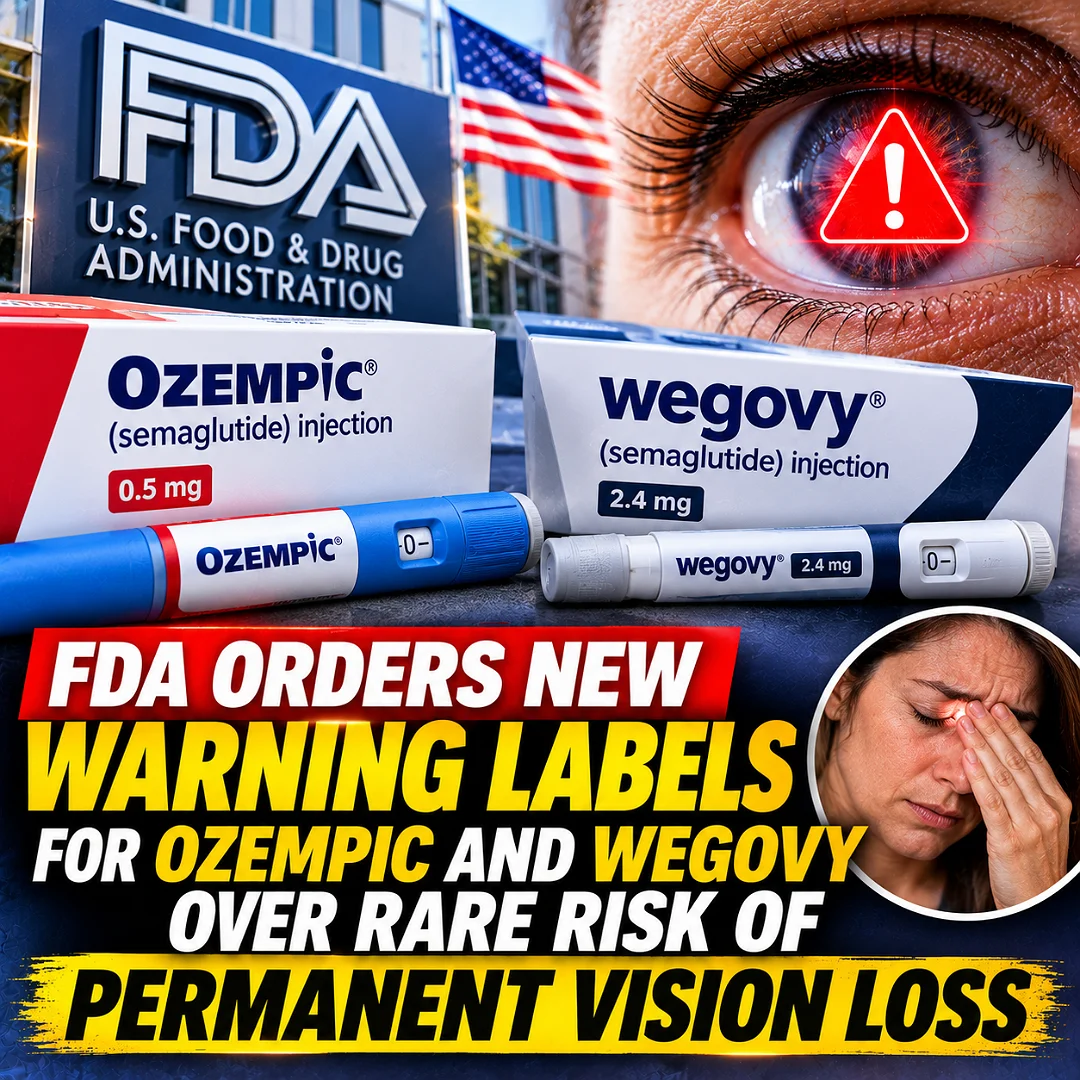
Did you know a medication designed to control blood sugar could jeopardize your eyesight?
The U.S. Food and Drug Administration (FDA) has ordered new warning labels for two popular GLP‑1 agonists,Ozempic and Wegovy,after identifying a rare, permanent vision‑loss side effect. The move, reported by Fox Business, underscores how even highly effective drugs can carry unexpected risks.
Ozempic (semaglutide) is prescribed to lower blood glucose in adults with type 2 diabetes when diet, exercise, and other medications are insufficient. Wegovy, a higher‑dose formulation of the same active ingredient, is approved for chronic weight management. Both drugs have become household names after dramatic weight‑loss results were shared across social media platforms.
What the FDA Warning Actually Says
The new label explicitly warns that patients may experience irreversible vision loss. The wording reads: “Permanent vision loss has been reported in rare cases. Discontinue use and seek immediate ophthalmologic evaluation if symptoms develop.” This language mirrors previous FDA actions that prioritized patient safety over market momentum.
More ad‑vanced readers will notice that the warning is not a blanket contraindication,rather, it is a precautionary alert for a side effect that appears to be extremely uncommon. The FDA’s decision was driven by post‑marketing surveillance data, which flagged a handful of case reports linking the drugs to optic neuropathy.
Why This Side Effect Matters Now
Permanent vision loss is a life‑altering condition. For patients already coping with diabetes‑related complications, losing sight adds a layer of disability that can affect independence, employment, and mental health. The timing is crucial because Ozempic and Wegovy usage has surged in the past two years, with prescriptions soaring by more than 200 % according to recent market analyses.
Why does this matter now? The rapid adoption of GLP‑1 agonists means that even a rare side effect can affect a significant number of people. Early detection and patient education become essential tools for clinicians who must balance therapeutic benefits with potential harms.
How the FDA Reached Its Decision
The FDA’s safety review involved data from the FDA Adverse Event Reporting System (FAERS), as well as independent case studies published in peer‑reviewed journals. While the exact number of reports has not been disclosed, the agency deemed the evidence sufficient to warrant a label change. The agency’s approach aligns with its broader commitment to post‑market surveillance, a principle reinforced after the Vioxx and thalidomide incidents.
According to the FDA’s own statements, the risk appears independent of dosage,both standard Ozempic and the higher‑dose Wegovy formulations are affected. This suggests the underlying mechanism may be related to the drug’s class effect rather than a dose‑dependent toxicity.
Understanding the Biological Plausibility
Semaglutide works by mimicking the hormone glucagon‑like peptide‑1 (GLP‑1), which increases insulin secretion and decreases glucagon release. The drug also slows gastric emptying and promotes satiety, leading to weight loss. However, GLP‑1 receptors are present throughout the body, including in the retinal vasculature and optic nerve.
Researchers hypothesize that altered blood flow or microvascular changes could compromise optic nerve health, especially in patients with pre‑existing vascular risk factors such as hypertension or diabetic retinopathy. Though speculative, this hypothesis aligns with known GLP‑1 effects on endothelial function.
What Existing Studies Say
To date, large‑scale randomized trials of semaglutide have not reported vision‑related adverse events as primary outcomes. The limited case reports that prompted the FDA warning were identified in post‑marketing surveillance, a setting known for uncovering rare events not captured in controlled trials.
One retrospective analysis published in *Ophthalmology* (2025) described four patients who developed sudden, painless vision loss after initiating semaglutide. All cases involved optic neuropathy confirmed by MRI, and symptoms persisted despite drug discontinuation. The authors called for heightened vigilance but emphasized that causality remains uncertain.
Practical Guidance for Patients and Clinicians
For patients already taking Ozempic or Wegovy, the new label does not necessitate immediate discontinuation. Instead, clinicians should counsel patients to watch for visual symptoms such as:
- Sudden blurry vision
- Loss of peripheral vision
- Difficulty distinguishing colors
If any of these signs appear, the recommendation is to stop the medication and seek urgent ophthalmologic evaluation. Early intervention may prevent further damage in some cases, although the FDA notes that the loss is often permanent.
Clinicians can mitigate risk by conducting baseline eye exams before initiating therapy, especially for patients with known eye disease. Regular follow‑up appointments (every 6,12 months) can help catch early changes.
What About Weight‑Loss Benefits?
Wegovy’s efficacy in achieving clinically significant weight loss,average reductions of 15 % of body weight,remains compelling. For many patients, the benefits outweigh the rare risk, especially when lifestyle interventions have failed. The key is informed consent: patients should understand both the potential advantages and the warning label’s implications.
Broader Context: Side Effects Across the Pharmaceutical Landscape
The Ozempic/Wegovy episode is not an isolated case of post‑marketing alerts. In recent years, other drugs have faced label changes for unexpected side effects:
- COVID‑19 vaccines, a study in *Science* linked rare side effects to differences in gut microbiomes (MSN).
- Lo Loestrin Fe, known for hormonal side effects (Medical News Today).
- Various oncology agents, highlighted by FDA safety communications.
These examples illustrate a growing trend: regulators are becoming more proactive in communicating rare but serious adverse events, emphasizing patient safety over commercial interests.
Impact on the Pharmaceutical Market
Ozempic sales peaked at $5 billion in 2025, while Wegovy generated $3 billion in its first full year. The warning labels could temper growth, especially if insurance providers adjust coverage policies. However, early data from similar label changes (e.g., the 2022 GLP‑1‑related pancreatitis warning) suggest that market impact is modest when the side effect remains rare.
Investors are watching closely. Analysts at Bloomberg note that “the label change is a signal that the FDA is tightening oversight, but it does not jeopardize the long‑term outlook for semaglutide.”
What to Expect Next
The FDA may issue additional safety communications as more data become available. Ongoing pharmacovigilance studies are expected to clarify the incidence rate and possible risk factors. For now, the agency urges healthcare professionals to report any suspected vision‑loss events through the MedWatch program.
More ad‑vanced readers will recognize that this situation underscores the importance of post‑marketing surveillance,a system that allows rare adverse events to be identified long after a drug is on the market.
Related Articles on Portal Super Interessante
For further reading, explore these related stories:
Continue acompanhando o Portal Super Interessante…