
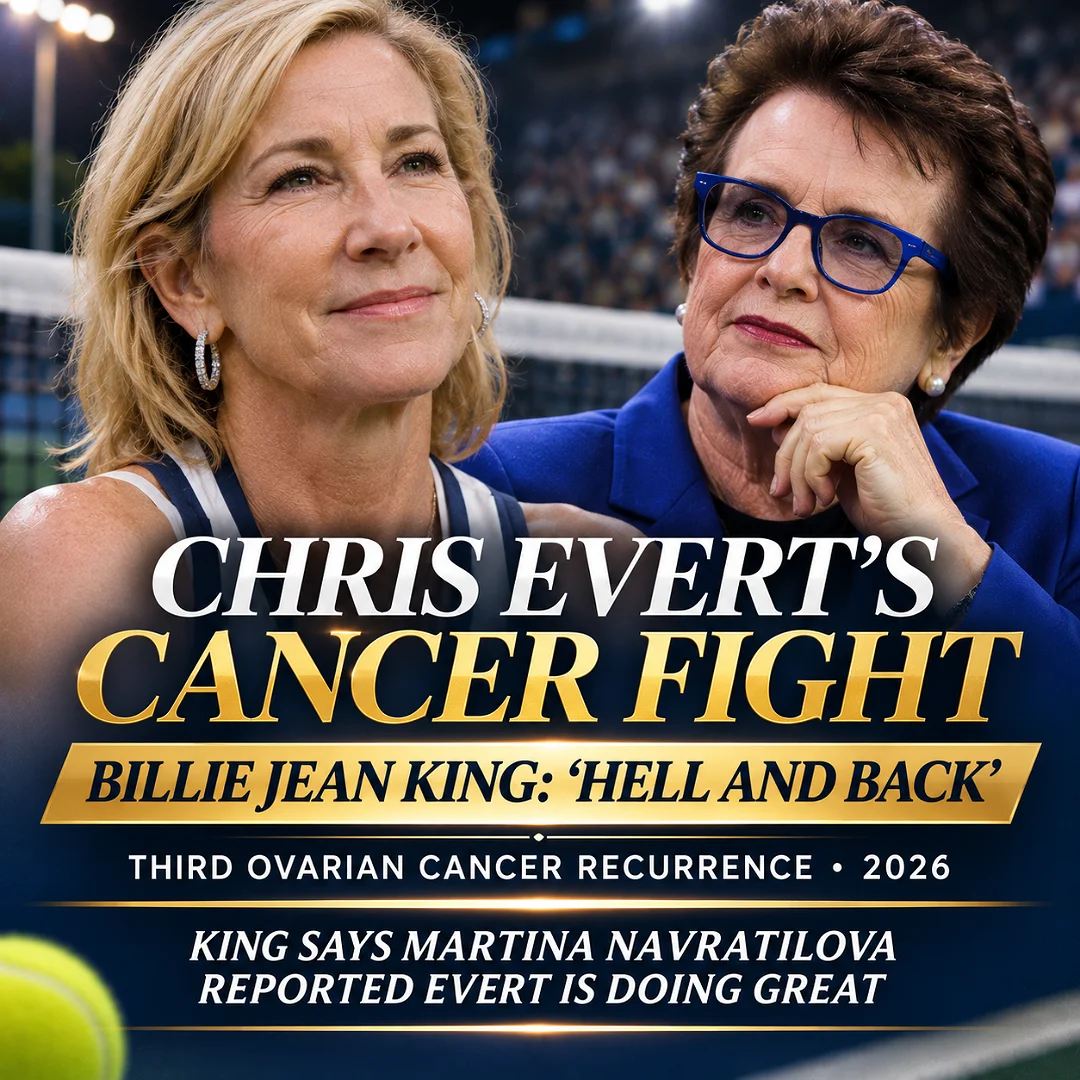
What does “hell and back” look like for an athlete who once ruled women’s tennis? For Chris Evert, the American legend with 18 Grand Slam singles titles, it has meant a long and very public fight with cancer. That is the blunt summary offered by Billie Jean King, another giant of the sport.
King’s words landed hard. Few people understand the pressure of elite tennis the way she does. Fewer still can describe a fellow champion’s struggle with that much emotion and authority.
The story behind the quote is bigger than one sentence, though. Later in this article you will see why Evert’s experience has become a public health conversation, and why one medical detail changes how many readers think about their own care.
What Billie Jean King Said About Chris Evert
According to the report circulating today, Billie Jean King said Chris Evert has been through “hell and back” amid her cancer battle. The phrase is short. It is also unusually raw for one public figure describing another.
The full setting of King’s comments, including where and when she spoke, was not detailed in the sources reviewed for this article. Portal Super Interessante will update readers if more context becomes available.
What we can say with confidence is that the statement reflects a reality Evert herself has made public. She announced she was free of ovarian cancer in January 2023. Later, as reported by Lance, she returned to treatment after new symptoms appeared.
In other words, King was not exaggerating for effect. She was describing a path that included victory, relief and then a return to the fight.
Chris Evert’s Cancer Journey: What the Confirmed Facts Show
Celebrity health stories get distorted quickly online. Rumors often spread faster than medical updates. That is why this timeline sticks strictly to information confirmed by established news outlets.
The Cancer-Free Announcement in January 2023
In January 2023, O Globo reported that Chris Evert had revealed she was free of ovarian cancer. She was 68 years old at the time.
For fans, the news felt like a championship point finally won. Ovarian cancer is a serious diagnosis, and hearing a beloved athlete declare herself cancer-free brought a wave of relief across the tennis world.
Yet medicine rarely follows a neat script. Cancer care usually involves monitoring long after treatment ends, because doctors know some cancers can return.
New Symptoms and a Return to Treatment
According to Lance, the Brazilian sports outlet, Evert went back into cancer treatment after presenting new symptoms. The report placed this return about two years after she had previously overcome the disease.
Specific details about her current treatment plan, her medical team or her prognosis have not been disclosed in the sources reviewed here. Respecting that privacy matters. Speculating about it does not.
Here is the detail that changes everything: a recurrence is not a failure on the patient’s part. It is a known feature of how some cancers behave, and it is a major reason oncologists stress long-term follow-up.
Why Billie Jean King’s Words Hit So Hard
Tennis is a lonely sport. Once a match begins, there are no teammates to share the load. Players solve problems alone, under pressure, in front of thousands of people.
That background gives King’s phrasing a special edge. When one champion tells the world that another champion has suffered, the message carries a credibility no press release can match.
It also humanizes Evert. For decades, fans saw her as composed and controlled on court. King’s description is a reminder that calm in public does not mean the private battle is easy.
There is another layer worth noticing. Public figures who speak openly about illness can change how people talk about it at home. A quote like this travels through social media, sports radio and family group chats.
Each share is a small opening. Someone reads it, recognizes a symptom or a family pattern, and finally books the appointment they had been putting off.
Who Is Chris Evert? The Legacy Behind the Headlines
To understand why this news resonates so widely, it helps to remember just how dominant Chris Evert was during her playing career.
From Fort Lauderdale to Global Stardom
According to UOL’s Terceiro Tempo, in a profile written by Marcos Júnior Micheletti, Evert was born in Fort Lauderdale, Florida, on December 21, 1954. That makes her 71 today, with her 72nd birthday arriving next month.
Florida became part of her identity as an athlete. Her rise from a young talent in the Sunshine State to an international star remains one of the most recognizable stories in American sports.
18 Grand Slam Singles Titles and Five Turns at No. 1
The numbers speak for themselves. O Globo describes Evert as an 18-time Grand Slam singles champion. The same outlet notes that she reached the world No. 1 ranking five times.
Those figures place her among the most accomplished players the women’s game has ever produced. Winning one Grand Slam title can define a career. Winning 18 builds a legacy that outlives the playing days.
Curiously, that résumé is part of why her health story feels so striking. Fans associate Evert with control, consistency and resilience. Cancer is an opponent that does not respond to any of those qualities in a simple way.
Still, the same mental toughness that carried her through long rallies is often what friends and fans point to when they talk about her now. King’s comment, in a sense, acknowledges both the pain and the strength.
Family at the Center: Colton, Nicholas and Alexander
Away from the court, Evert is a mother of three sons. UOL identifies them as Colton, Nicholas and Alexander.
Families often carry an invisible share of a cancer journey. Appointments, test results and long waits affect everyone at the table, not only the patient.
How her sons have been involved in her care has not been publicly detailed in the sources consulted. Even so, any reader who has supported a parent through serious illness knows how deeply that experience shapes a family.
That shared experience is one reason stories like this connect far beyond sports fans. Many readers see their own parents, siblings or grandparents in Evert’s situation.
Understanding Ovarian Cancer: What Readers Should Know
Evert’s story has drawn attention to ovarian cancer, a disease many people know little about until it touches someone close. The information below is general guidance from recognized health institutions. It is not a description of Evert’s specific case.
Why It Is Often Called a Silent Disease
Organizations such as the American Cancer Society and the National Cancer Institute note that early ovarian cancer often causes no symptoms, or only vague ones. That is a major reason the disease is frequently found at a later stage.
Those early signs can resemble common digestive or bladder problems. Many women dismiss them, and that reaction is understandable. Busy lives make it easy to blame stress, diet or age.
Symptoms Doctors Say Should Not Be Ignored
The American Cancer Society lists several symptoms that may be linked to ovarian cancer, especially when they are new and persistent:
- Bloating
- Pelvic or abdominal pain
- Trouble eating or feeling full quickly
- Urinary symptoms, such as urgency or needing to go often
These symptoms are usually caused by something other than cancer. The key word is persistence. When they continue for weeks, health experts recommend talking to a doctor.
Genetics, Family History and the Screening Question
The National Cancer Institute identifies inherited changes in genes such as BRCA1 and BRCA2 as known risk factors for ovarian cancer. A family history of ovarian or breast cancer can also raise risk.
Unlike breast or cervical cancer, there is currently no routine screening test recommended for ovarian cancer in women at average risk. That makes awareness of symptoms and family history even more important.
For people with a strong family history, genetic counseling is often recommended. It is a conversation worth starting with a primary care physician or a gynecologist.
Why This Matters Right Now
So why is a single quote from Billie Jean King making headlines today? Because it arrives at a moment when public attention can shape real behavior.
When a widely admired figure like Chris Evert faces illness openly, it lowers the stigma around discussing symptoms. People who might have postponed a checkup sometimes make the call after reading a story like this one.
There is also an important lesson about recurrence. Many people assume “cancer-free” means “finished forever.” Evert’s experience, as reported by Lance, shows that follow-up care is a crucial part of the journey.
Finally, the timing matters for the tennis community itself. Legends of the sport are aging, and their health stories increasingly become part of how fans relate to them. Support for Evert reflects respect built over decades.
How Chris Evert’s Story Affects You
You do not need to be a tennis fan to take something useful from this news. Here are three practical lessons:
- Listen to persistent symptoms. Vague discomfort that does not go away deserves medical attention.
- Know your family history. Ask relatives about cancers on both sides of the family.
- Keep follow-up appointments. Monitoring after treatment exists for a reason.
Support matters too. If someone in your life is going through treatment, small gestures count. A ride to an appointment, a home-cooked meal or a simple text can ease a heavy week.
And if you are the one facing a diagnosis, Evert’s openness offers a quiet message. Talking about it is not weakness. It can be part of how people get through it.
What Has Not Been Disclosed Yet
Responsible reporting means being clear about the gaps. Based on the sources reviewed, the following information has not been publicly confirmed:
- The exact setting and date of Billie Jean King’s remarks
- Details of Chris Evert’s current treatment
- Any updated prognosis from her medical team
Portal Super Interessante does not speculate on private medical matters. We will report new information only when it comes from credible, verifiable sources.
Sources Consulted
- O Globo: Chris Evert, lenda do tênis, revela que está livre do câncer de ovário (author not listed in the material reviewed)
- UOL Terceiro Tempo, by Marcos Júnior Micheletti: Que fim levou? Chris Evert
- Lance: Chris Evert volta a sofrer com câncer (author not listed in the material reviewed)
- General health information: American Cancer Society and National Cancer Institute
Related Topics to Explore Next
- How retired athletes talk about illness and recovery in public
- Early warning signs of common cancers that are often overlooked
- The champions who shaped women’s tennis over the past half century
Find more stories on health, sports and trending topics on the Portal Super Interessante homepage.
Final Thoughts
Chris Evert spent her career making difficult moments look manageable. Her cancer fight, described so bluntly by Billie Jean King, shows a different side of that strength. It is less about winning and more about enduring, one appointment and one day at a time.
Her story also leaves readers with something practical: pay attention to your body, know your family history and never treat follow-up care as optional. Those lessons may matter long after this headline fades.
Continue following Portal Super Interessante for verified updates on Chris Evert and the stories shaping the world right now.
Tags: Chris Evert, Billie Jean King, ovarian cancer, tennis legends, women’s tennis, Grand Slam, cancer awareness, cancer recurrence, sports health, Fort Lauderdale